Why Real Estate is the Foundation of Wealth Creation
March 13, 2024
Discover the transformative power of a wealth mindset in real estate investment.
Read More >>>
.png)


-2.png)
In commercial real estate, the most significant risks are rarely visible in headline returns or year-one projections. They emerge over time through rising operating expenses, capital expenditures that weren’t fully underwritten, tenant rollover risk or assets that become less relevant as market and regulatory expectations evolve.
That reality has pushed many experienced investors to look beyond surface-level metrics. Environmental, social and governance (ESG) in commercial real estate has become a practical lens for evaluating asset durability, operating efficiency, tenant stability and management discipline, which directly influence cash flow consistency and downside protection. Today, these considerations are incorporated routinely into underwriting, financing decisions and exit strategies by institutional capital and lenders.
For you as a long-term investor focused on owning high-quality, income-producing assets, ESG isn’t a trend or a label. It supports disciplined decision-making by helping distinguish properties designed to perform across multiple market cycles from those that may quietly erode value over time. When applied correctly, ESG reinforces the fundamentals that matter most in resilient commercial real estate investing.
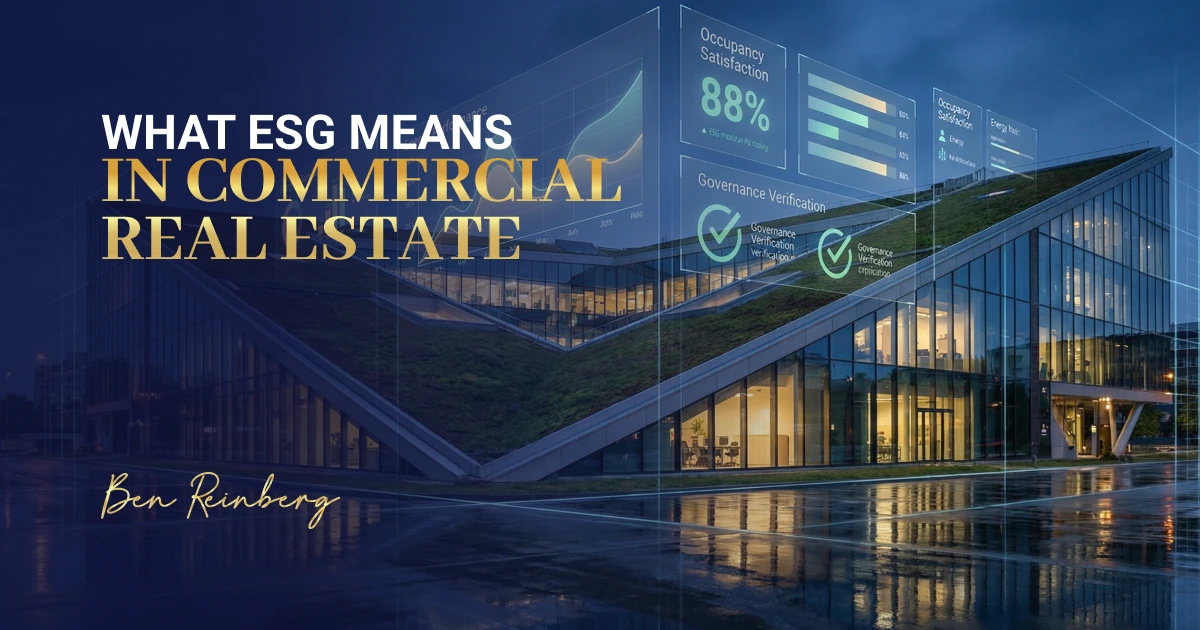
When evaluating commercial real estate, ESG is best understood as a set of practical filters to assess how an asset will perform over its entire holding period. ESG factors influence operating costs, tenant stability, capital requirements and exit outcomes, making them increasingly relevant when underwriting opportunities in today’s commercial real estate market.
Used correctly, ESG doesn’t replace fundamentals. It sharpens them. It helps you stress-test assumptions around expenses, demand durability and management discipline before capital is committed.
From an ownership perspective, environmental factors show up in the numbers. Energy consumption, building systems, infrastructure age and exposure to physical risks directly affect operating expenses and future capital plans.
When a property relies on outdated systems or deferred maintenance, you often see margin compression through rising utility costs and unplanned capital expenditures. Assets aligned with proven green building trends tend to operate more efficiently and hold up better over long investment horizons, supporting stable cash flow rather than unexpected drawdowns.
Social factors are about tenant durability and demand reliability. Properties serving non-discretionary uses, such as healthcare, logistics and other essential services, typically deliver more consistent occupancy and income than assets tied to consumer spending cycles.
As an investor, that consistency matters. It supports predictable cash flow and reinforces the idea that long-term wealth creation in real estate comes from owning assets tied to essential demand rather than short-term trends.
Governance reflects how well an asset is managed over time. Capital allocation discipline, leverage control, transparency and a long-term ownership mindset all influence whether an investment performs as expected or breaks down under pressure.
Strong governance keeps decisions grounded in fundamentals and helps you avoid unnecessary risk when markets tighten. In practice, this discipline is inseparable from effective risk management, especially during periods of volatility or changing capital conditions.
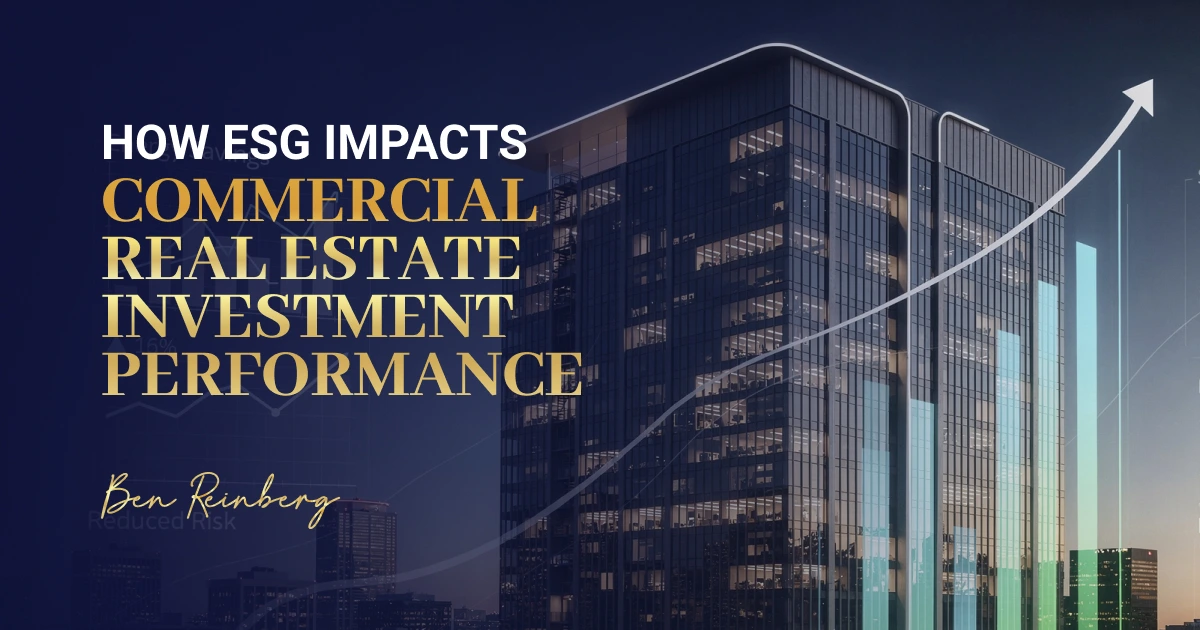
When you evaluate commercial real estate over a full holding period, ESG factors show up where performance actually matters. They influence returns through several practical channels:
For you as an investor, this means performance is shaped by more than initial yield. Assets selected for durability, efficiency and disciplined management are better positioned to preserve cash flow and navigate market volatility. This approach aligns closely with proven return-on-investment (ROI) strategies that prioritize long-term performance over short-term optimization.
In commercial real estate, ESG works best as a risk filter before capital is committed. Environmental exposure, tenant durability and governance discipline all influence how risk materializes over a full holding period.
When these factors are ignored, issues often surface later as higher operating costs, unplanned capital expenditures or reduced exit liquidity. Using ESG early in underwriting helps you identify vulnerabilities, adjust assumptions and select assets built for long-term performance. This approach aligns with disciplined market analysis focused on durability rather than short-term signals.
Healthcare and medical office real estate are where ESG considerations are most clearly reflected in practice. Demand for healthcare services is driven by demographics and utilization, not consumer spending cycles, which supports tenant durability and long-term relevance.
Medical office buildings serve essential needs, typically have longer lease terms and benefit from high tenant investment in the space. For you as an investor, that translates into more predictable cash flow and stronger performance during periods of economic uncertainty. These characteristics are central to why healthcare assets are often viewed as smart investments when building recession-resilient commercial real estate portfolios.
Sustainability is often discussed alongside ESG, but in commercial real estate investing, what matters is whether an initiative improves asset performance. Energy-efficient building systems, modern infrastructure and practical upgrades can lower operating expenses, strengthen net operating income (NOI) and help properties remain competitive over long holding periods.
As you underwrite opportunities, the focus should stay on how sustainability impacts cash flow, capital requirements and tenant retention. Improvements that support operational efficiency and long-term relevance tend to compound value over time, while cosmetic upgrades rarely justify their cost. When evaluated through disciplined underwriting, sustainability becomes a performance tool, not a marketing feature, supporting sound investment strategies built around durable, income-producing commercial real estate assets.
For you as an investor, ESG factors matter only when they affect risk exposure and cash flow. The most relevant considerations are operating efficiency, tenant durability, regulatory risk and an asset’s ability to remain functional and competitive over a long holding period.
ESG works best when it is built directly into underwriting pressure-testing expense assumptions, demand stability and capital needs rather than treated as a reputational overlay. Long-term performance in commercial real estate still comes down to fundamentals, experience and disciplined execution. That focus is central to identifying durable investment opportunities that can perform across market cycles.
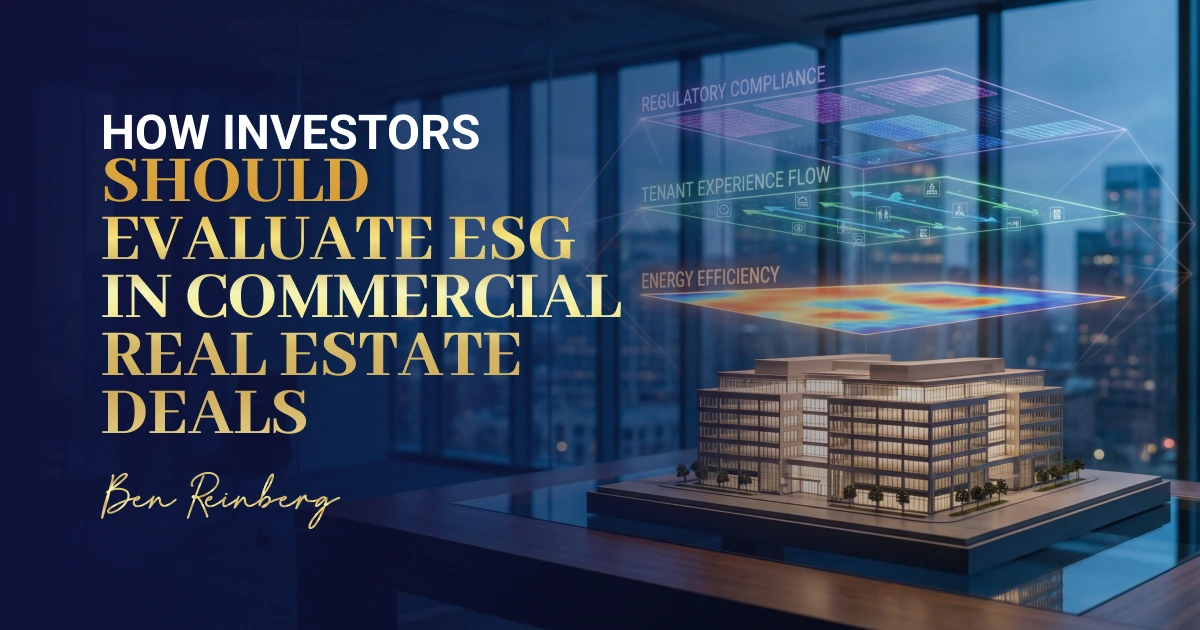
When you evaluate ESG in a commercial real estate deal, the focus should stay on how the asset performs over time. As you underwrite opportunities, consider:
Used correctly, ESG strengthens disciplined underwriting rather than replacing it. This approach aligns with fundamentals-driven real estate investments that prioritize long-term ownership, asset quality and execution.
As you gain experience across market cycles, it becomes clear that no single framework drives successful outcomes in commercial real estate. ESG is one lens used alongside fundamentals like location quality, tenant durability, cash flow strength and risk management to help you evaluate whether an asset is built to perform over time.
Seasoned investors tend to rely on the same core principles: durable demand, prudent leverage, disciplined underwriting and consistent operational execution. ESG supports this approach by helping you pressure-test asset quality, surface risks that may not appear in early projections and assess how a property is likely to perform as operating costs, regulations and capital market conditions evolve.
Used with discipline, ESG strengthens sound investment judgment rather than replacing it. It helps you stay focused on owning resilient, income-producing commercial real estate that performs across market cycles and supports a recession-resilient investment strategy over the long term.
In commercial real estate, results are shaped long before an asset is acquired. ESG can help surface material risks, but performance is driven by disciplined underwriting, sound judgment and decisions informed by market cycles. When conditions change, as they inevitably do, experience becomes the difference between protecting capital and exposing it.
That same disciplined approach has guided Ben Reinberg in building a commercial real estate portfolio exceeding $500 million, shaped by decades of acquisitions, billions in completed transactions and a 28% historical internal rate of return (IRR) across multiple asset classes. Frameworks evolve, but the foundation of durable performance remains constant: conservative assumptions, risk management and execution rooted in experience.
Apply ESG with discipline. Invest with clarity. Build income-producing commercial real estate designed to perform through change. Connect with Ben Reinberg.
Hedging against commercial real estate risk starts with disciplined underwriting, conservative assumptions and diversification across resilient property types and demand drivers. Investors reduce downside exposure by focusing on tenant durability, market fundamentals and thoughtful site selection supported by active risk management practices. Integrating ESG in commercial real estate strengthens this approach by identifying operational, regulatory and asset-level risks before capital is deployed. This framework aligns with proven approaches outlined in risk management and commercial real estate investment strategies.
In commercial real estate, sustainability means improving operational efficiency, asset durability and long-term competitiveness rather than pursuing cosmetic upgrades. Sustainable commercial real estate focuses on energy systems, infrastructure quality and building performance that directly affect expenses and tenant retention. When aligned with ESG in commercial real estate, sustainability becomes a tool for protecting margins and preserving asset value across market cycles. These principles are closely tied to performance insights found in green building trends and broader perspectives from the commercial real estate industry.
Valuing commercial real estate cash flow requires analyzing net operating income, expense sustainability, capital requirements and tenant stability over a full holding period. Investors assess how durable income is under different market conditions, not just initial yield. Incorporating ESG in commercial real estate helps identify risks that may impact cash flow, such as deferred maintenance, regulatory exposure or inefficient systems. This valuation discipline is reinforced by detailed underwriting frameworks like those used to evaluate multifamily.
For many investors, real estate remains one of the most effective vehicles for long-term real estate investing because it combines income, tax efficiency and inflation protection. Commercial assets tied to essential demand drivers often support consistent cash flow and long-term appreciation, contributing to sustainable wealth through real estate. Applying ESG in commercial real estate further strengthens outcomes by prioritizing asset durability and risk control. This long-term perspective is central to building resilient portfolios through disciplined ownership principles highlighted by Ben Reinberg.