Why Real Estate is the Foundation of Wealth Creation
March 13, 2024
Discover the transformative power of a wealth mindset in real estate investment.
Read More >>>
.png)


-2.png)
A commercial real estate (CRE) portfolio shows its weaknesses when exposure begins to move in the same direction. Income, liquidity and valuation respond along the same lines, narrowing how capital moves inside the structure. At that point, portfolio behavior carries more weight than individual assets.
Diversified commercial real estate changes how portfolio components interact. Correlation shifts across assets, income behavior separates and capital reallocates as markets rotate. Then, you will begin to see the portfolio operate as an integrated system rather than a set of isolated positions.
That system introduces its own complexity. Structure, tenant mix, geography and capital layering begin interacting in ways that surface exposure you may not have anticipated. At that point, diversification stops feeling optional while the path to achieving it remains unresolved.
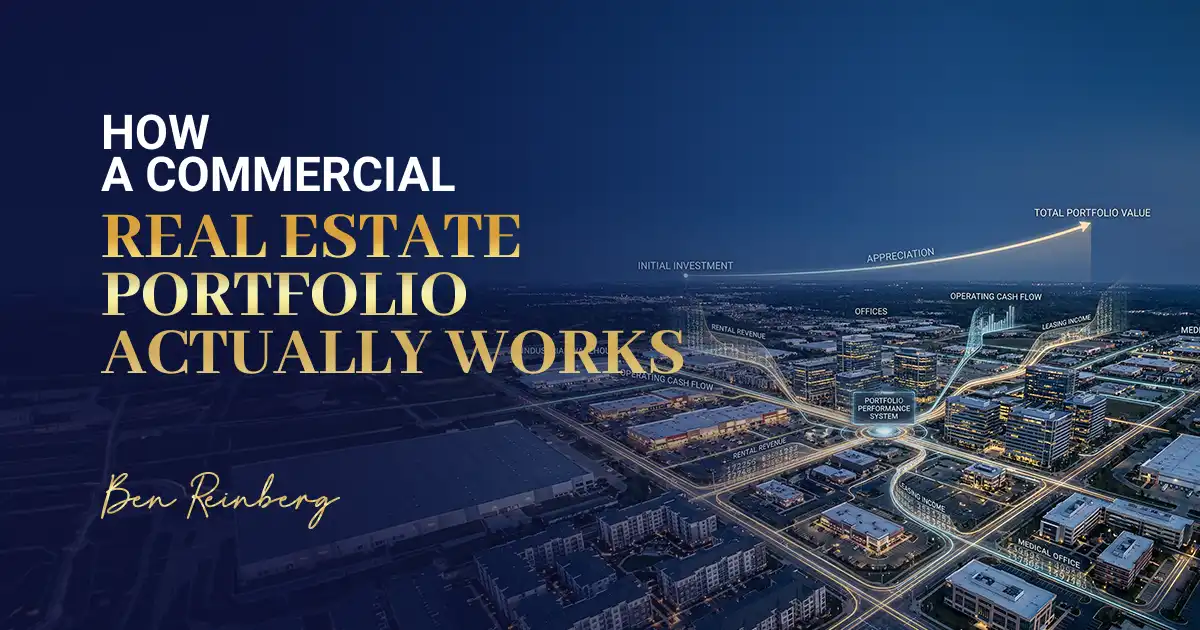
A commercial real estate portfolio moves as a system. Lease terms, tenant profiles, asset class exposure and geography sit side by side within the same capital structure. Over time, those elements interact and shape how your commercial real estate portfolio behaves across different market conditions.
A few components consistently define that interaction includes:
As markets shift, asset behavior reflects how demand, pricing and capital flows register across property types. Geographic markets introduce their own timing and rhythm, adding another layer to how your commercial real estate portfolios experience change.
All of this sits within the broader commercial real estate definition, where structure establishes exposure early and carries it forward as conditions evolve.
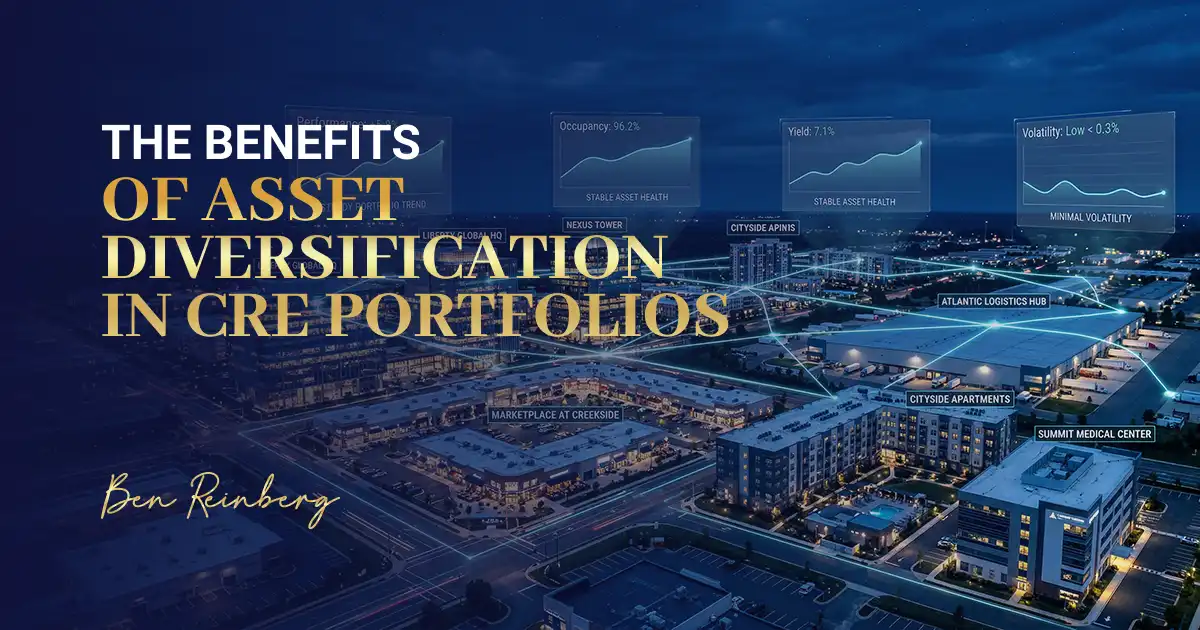
Risk tends to build quietly when capital depends on a narrow set of outcomes. Diversified commercial real estate distributes exposure across different types of commercial real estate, such as industrial, retail and medical office, each tied to different demand drivers and operating rhythms across regions.
As conditions shift unevenly, the commercial real estate portfolio absorbs movement without requiring broad repositioning.
Cash flow volatility often traces back to concentration. Portfolios spanning multiple tenant industries and lease structures tend to smooth income naturally. Weakness in one segment is offset elsewhere frequently, producing performance shaped by portfolio design rather than reliance on a single revenue source.
Economic cycles register unevenly across sectors. Industrial demand may respond to supply chain shifts, while medical office activity follows healthcare utilization patterns. A diversified commercial real estate portfolio reflects these timing differences as capital rotates across markets.
Appreciation tends to emerge from multiple drivers over extended horizons. Demographics, supply conditions and capital availability influence assets differently across markets. Diversification allows your commercial real estate portfolio to participate across those dynamics rather than tying outcomes to a single assumption.
Flexibility becomes visible when assets mature on different timelines. Industrial real estate investment facilities, retail centers and medical office properties tend to reset financing and lease structures at different intervals.
That spacing shapes commercial real estate portfolio management by spacing liquidity events and capital decisions as conditions evolve.
Tenant concentration amplifies downside when sectors contract. You can diffuse that dependency as you diversify your commercial real estate portfolio. When one industry retrenches, portfolio performance reflects broader economic participation rather than isolated exposure, reinforcing resilience through structural insulation.

A diversified commercial real estate portfolio develops through a series of structural decisions that compound over time. Each step in building a powerful commercial real estate portfolio influences how capital behaves once exposed to real markets, real tenants and real cycles.
Portfolio construction begins with how property types behave as liquidity, demand and capital rotate. Industrial assets tend to track supply chain activity and distribution demand.
Medical office properties follow healthcare utilization and provider stability. Retail real estate performance ties more closely to consumer patterns and tenant mix. Together, these assets introduce distinct income and valuation dynamics that shape the behavioral range of a commercial real estate portfolio.
Markets rarely move in sync. Employment drivers, regulatory environments and supply pipelines create uneven cycles across regions. Geographic exposure introduces timing differences that shape your portfolio performance as capital migrates between markets.
Balance emerges through exposure, not labels. Core stability, transitional upside and higher-volatility positions coexist within durable commercial real estate portfolios. Risk classification influences cash flow predictability, capital deployment pace and sensitivity to economic disruption.
Direct holdings, pooled vehicles and fractional participation each carry distinct liquidity, governance and scale characteristics. When you combine these thoughtfully, they broaden market access while limiting overconcentration in any single structure.
Execution depth, transaction continuity and shared downside exposure influence outcomes long after acquisition. Partners operating across cycles bring a perspective shaped by participation rather than positioning. Alignment at this level affects how commercial real estate portfolios absorb complexity when conditions shift.
Once assembled, the portfolio evolves through asset interaction rather than isolated performance. Correlation revea
At scale, building a diversified commercial real estate portfolio reflects a sequence of commitments carried forward through live market conditions. The distinction becomes visible when capital responds to movement that no single asset or structure anticipates.
Success in commercial real estate comes from strategy executed at the portfolio level. Through decades of active participation in the industry, I’ve built a track record shaped by how assets are structured, sequenced and diversified across cycles. That approach has carried me through more than $500 million in commercial real estate and billions in completed transactions, with a 28 percent historical internal rate of return (IRR) across industrial, retail and medical office assets.
That performance did not come from isolated deals or market timing. It emerged from strategic portfolio diversification combined with disciplined execution across assets and market environments. If you’re curious how that framework translates at the portfolio level, connect with me today, and we’ll take this forward together.
A commercial real estate portfolio represents a group of income-producing properties held within a single capital structure. It reflects how assets, tenants, markets and lease terms interact to shape cash flow, risk exposure and long-term performance.
Commercial real estate portfolio management focuses on how assets perform together over time. It considers leasing cycles, capital structure, market exposure and asset interaction to manage income stability, risk concentration and capital flexibility.
Adding commercial real estate introduces income-producing assets with distinct market behavior. Commercial real estate investing can diversify portfolio exposure through lease-driven cash flow, sector variation and geographic separation within broader capital allocations.
A diversified real estate investment portfolio forms through asset type mix, geographic separation, tenant diversity and capital structuring. Over time, correlation across these elements defines how investors diversify real estate portfolio exposure in live markets.